
New!

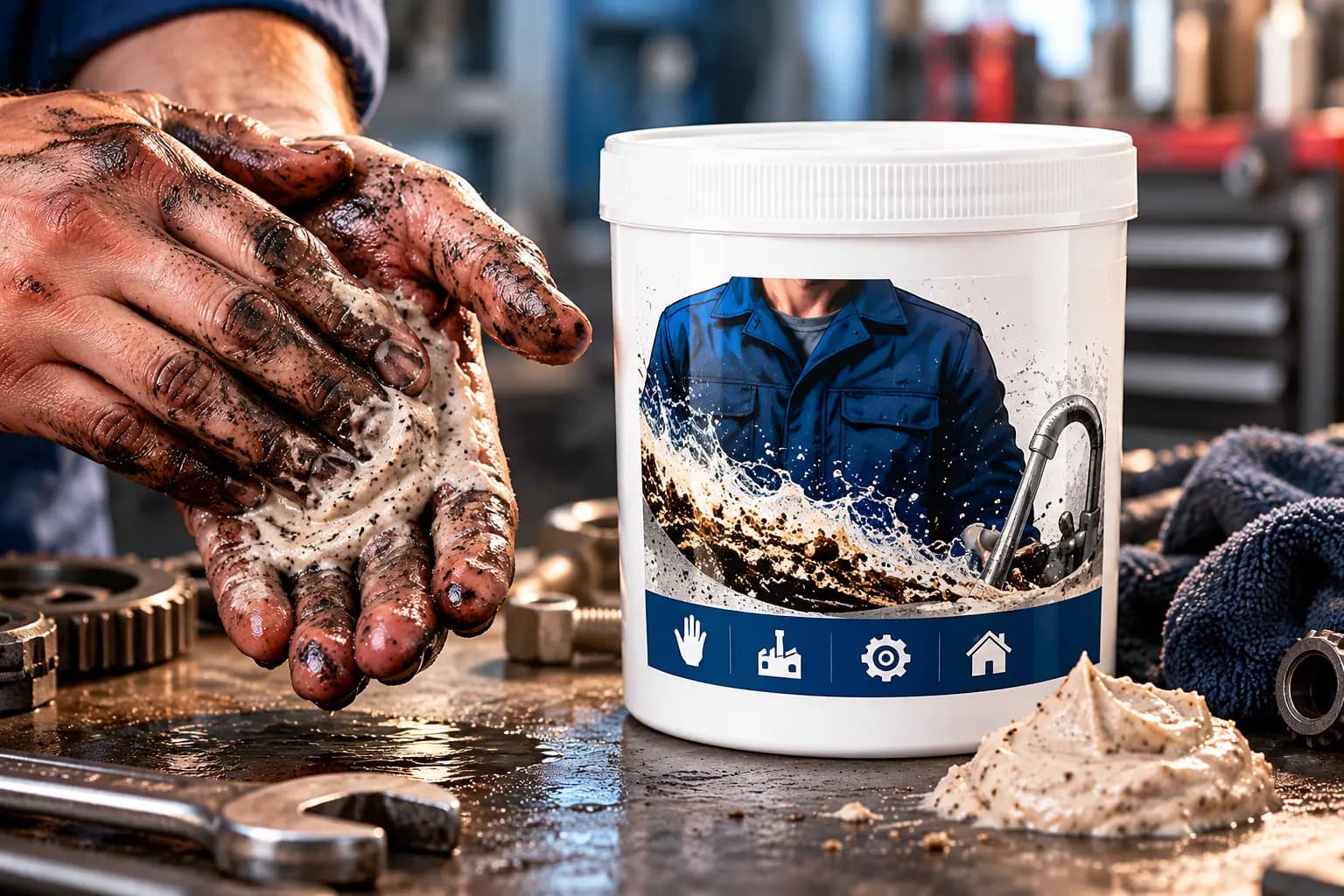
After working on an engine, oil, grease and soot can remain in skin creases and around fingernails. Ordinary soap may struggle, but the strongest scrub is not always the best option. The goal is to remove contamination without unnecessary damage to the skin.
Motor oils and greases contain components that do not readily dissolve in water. Soot and fine particles can cling to skin creases and nails, making plain soap less effective on heavy contamination.
Avoid aggressive scrubbing: friction can damage the skin barrier.
Surfactants help lift oily soil so it can be rinsed away with water. Anionic and nonionic surfactants are common, but effectiveness and skin tolerance depend on the entire formula and concentration.
Some products include oily cleansing agents or solvents that help loosen grease. Abrasives such as pumice or plant-derived granules help remove stubborn deposits mechanically. Glycerin and other humectants may reduce dryness, but do not automatically make a strong cleanser gentle.
Fragrances and preservatives can trigger irritation or allergic contact dermatitis in susceptible people. Check the actual product label rather than assuming all pastes share one formula.
An abrasive paste can help remove embedded soot, but frequent forceful scrubbing increases irritation risk. A non-abrasive gel or cream may be more suitable for frequent washing.
Neither format is inherently safe or unsafe: formulation, frequency and skin condition matter.
First wipe away excess grease with a clean disposable towel. Apply a hand cleaner as directed: some pastes are designed for dry hands, others for wet skin.
Massage gently around fingers and nails, add water if instructed, rinse thoroughly with lukewarm water, dry carefully and apply a fragrance-free moisturizer.
Repeated exposure to oils, detergents, water and friction can impair the skin barrier, causing dryness, redness, cracking and irritant contact dermatitis. Some ingredients may also cause allergic reactions.
If painful cracks or a persistent rash develop, reduce exposure and seek advice from a healthcare professional. Avoid abrasive scrubbing on damaged skin.
For light dirt, start with a mild hand wash. For heavy grease, choose a dedicated mechanic hand cleaner and reserve abrasive paste for when it is needed.
Never wash skin with petrol, brake cleaner, paint thinner or an industrial degreaser not labelled for skin use. These can cause significant irritation and other health risks.
Wear task-appropriate protective gloves during work and replace contaminated gloves. Barrier creams do not replace gloves.
The best cleaner is not the harshest one. Choose a formula that removes the contamination you encounter while minimizing repeated skin damage.
Can dishwashing liquid remove motor oil from hands?
It can remove grease but may dry skin with repeated use. A product formulated for hands is preferable.
Is abrasive hand-cleaning paste harmful?
Not necessarily, but vigorous or frequent rubbing increases irritation risk. Use it gently and only when needed.
Can mechanics use hand cleaner every day?
Yes, if the product is intended for frequent use and the skin tolerates it. Prefer gentler formulas and moisturize.
Is petrol safe for cleaning hands?
No. Petrol and industrial solvents are not hand cleansers and can harm the skin.
A selection of products related to this guide.